
 Join us





Desk | Gadchiroli
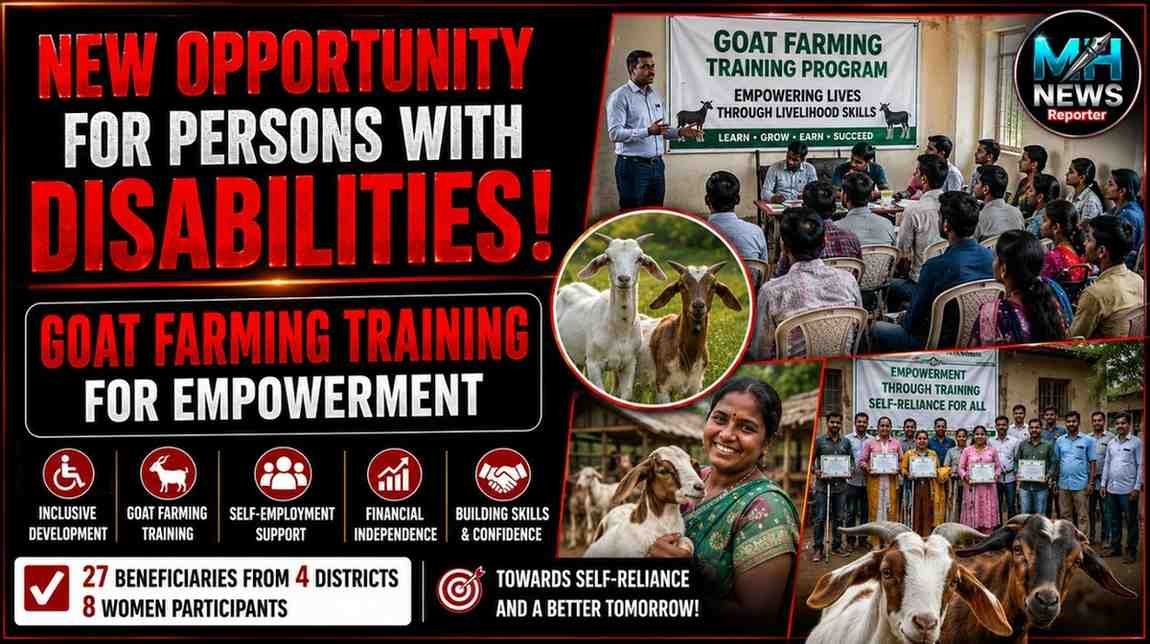
27 beneficiaries from four districts participate in goat farming training program
In a significant step towards empowering persons with disabilities in rural areas, a three-day goat farming training program was successfully conducted from May 25 to 27 at the Rani Durgavati Training Centre in Yerandi. The initiative aimed to make differently-abled individuals financially independent by encouraging self-employment opportunities through livestock farming.
The training was organized under the Community-Based Rehabilitation Project for Persons with Disabilities, operated by “Aamhi Aamchya Arogyasathi” संस्था through its Social Entrepreneurship Development Program.
A total of 27 beneficiaries from 12 talukas across Gadchiroli, Bhandara, Gondia districts participated enthusiastically in the program. Notably, eight women beneficiaries also took active part in the training, highlighting growing awareness and participation among disabled women in rural entrepreneurship.
The program was conducted under the guidance of Senior Project Manager Manoj Meshram. Assistant Project Manager Sangita Tumde provided detailed insights into the organization’s work, disability rights, social inclusion, self-help groups, and the importance of government welfare schemes.
Subject experts Mohit Chaudhary and Naresh Kamble explained the benefits of goat farming as a low-investment and sustainable business model suitable for rural livelihoods. Founder Dr. Satish Gogulwar emphasized the need for leadership development and self-reliance among persons with disabilities so they can lead dignified and independent lives.
Livestock experts including Dr. Naresh Kamble, Dr. Vrushali Brahmankar, Dr. Jayant Sukare, Livestock Development Officer Dr. Kapil Koreti, and Livestock Supervisor Laxman Lanje guided participants on scientific goat farming techniques and animal care. Information related to market opportunities and business planning was also shared during the sessions.
The training program received strong support from coordinators, veterinary officers, trainers, and community workers, making it a successful initiative towards inclusive rural development and economic empowerment.